
How Kyona remembers
Kyona remembers what you tell it — your preferences, your routines, the people in your life — so you don't have to repeat yourself.
What Kyona remembers
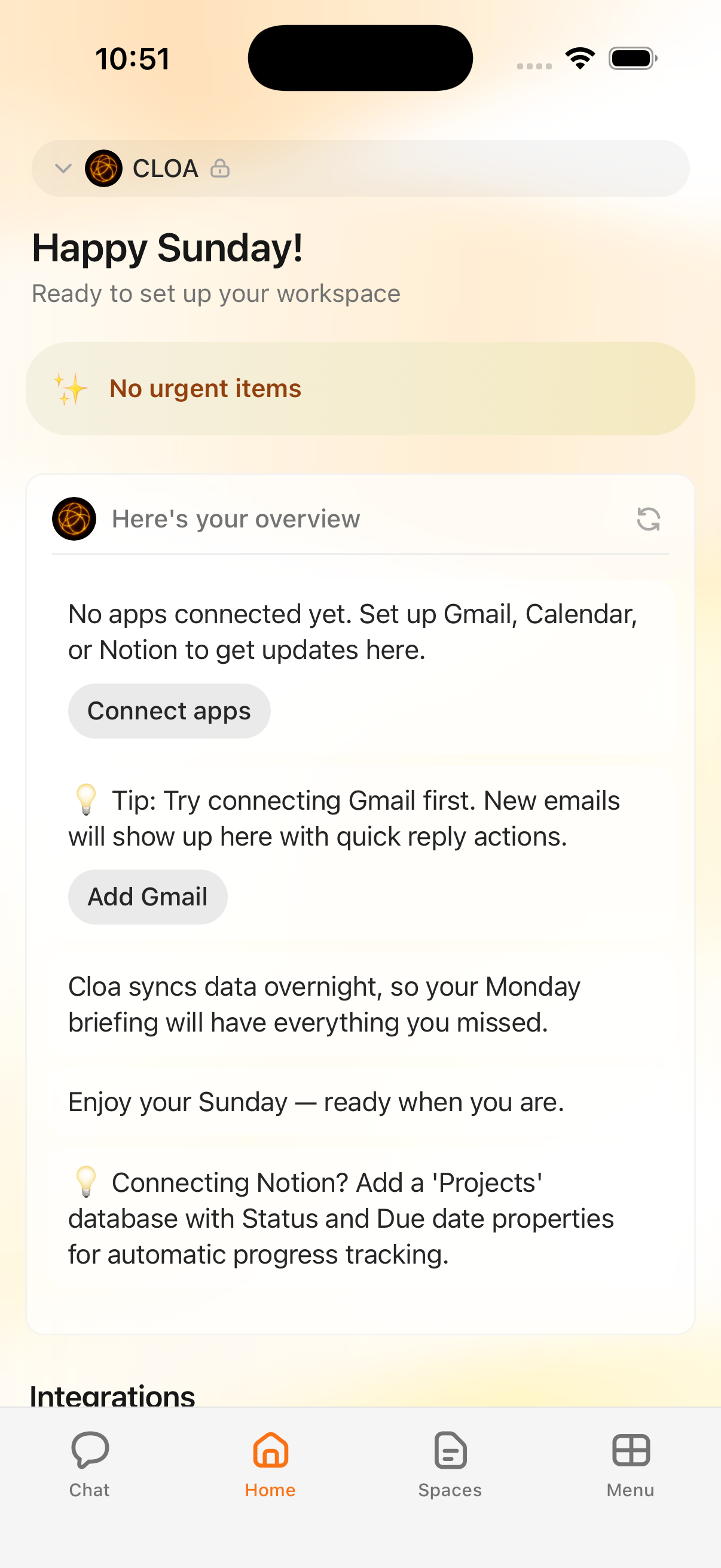
Kyona keeps track of details that help it act more like a person who already knows you. Over time, it picks up on:
- Preferences — your usual coffee order, the cuisines you avoid, whether you prefer morning or evening meetings.
- Relationships — your manager's name, your partner, your closest friends, your kids and their ages.
- Routines — Wednesday is yoga night, you take a long walk after lunch, you check email first thing on Monday.
- Ongoing context — the project you're shipping this quarter, the trip you're planning, the apartment search you've been on for a month.
You don't have to format these as facts. Kyona picks them up from normal conversation. You can also be explicit when it matters: "Remember that I'm allergic to shellfish."
How memory shows up in conversation
The point of memory isn't a database. It's that Kyona quietly fills in context so you can skip the setup.
If you mentioned a shellfish allergy two weeks ago, and today you ask Kyona to recommend a restaurant for a client dinner, the recommendation already accounts for it. You won't see "I noticed your allergy" — you'll just notice the suggestions are right.
The same thing happens with smaller details. Ask Kyona to draft a message to your manager and it'll use the name you mentioned before. Ask it to plan your Tuesday and it'll know you're at the gym from six to seven.
When Kyona needs to fill a gap rather than guess, it'll ask a short clarifying question instead.
Memory across channels
Kyona's memory follows you, not the device. The chats you have in the mobile app, the voice calls you take on your phone, and the conversations you have through your Telegram channel all draw on the same memory.
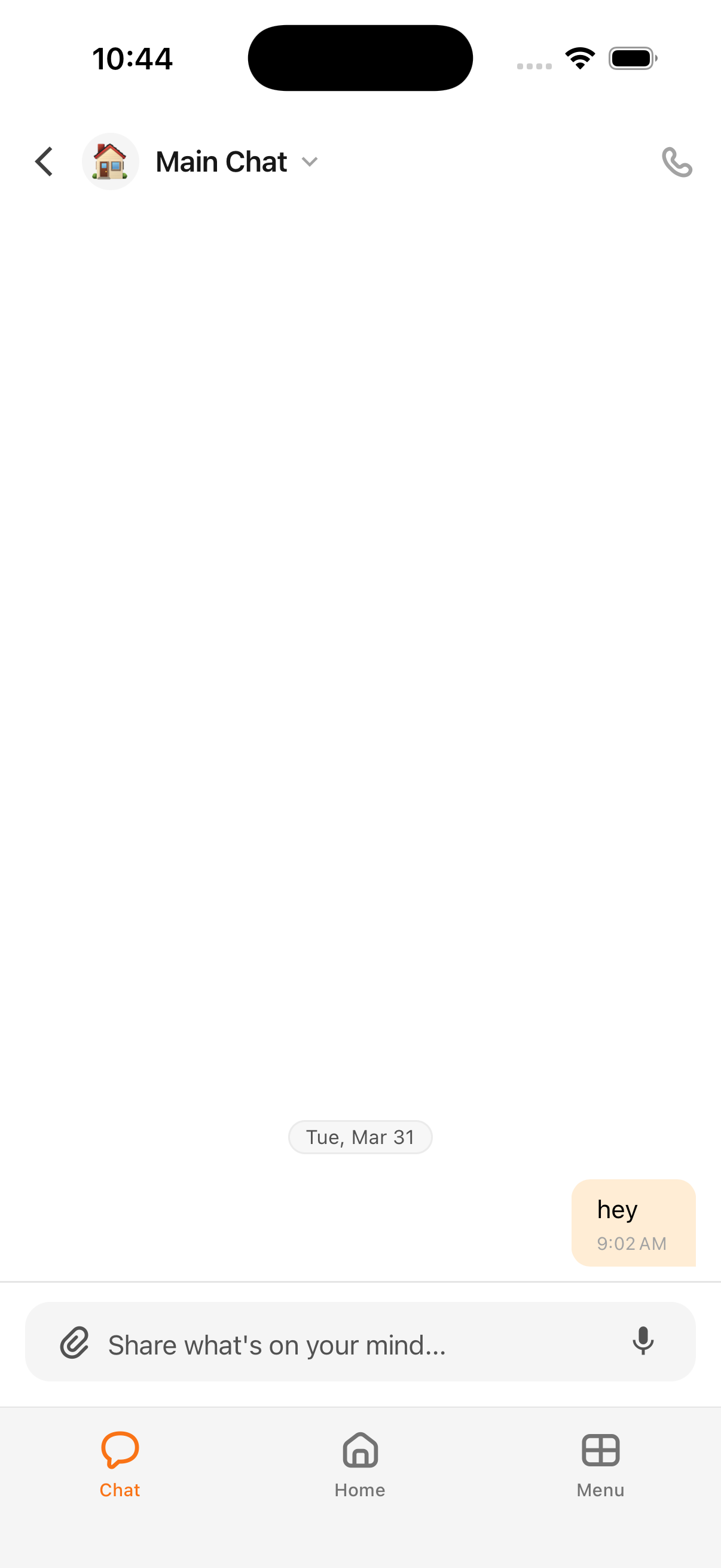
If you tell Kyona during a voice call that your flight got moved to Friday, the next time you message in the app it already knows. If you mention in Telegram that your sister is visiting next weekend, Kyona can plan around it when you ask in chat.
Companion memory is separate
Each Companion has their own memory, kept separate from the main Kyona and from each other.
What you share with Hana stays with Hana. Aria doesn't know what you told Yuna last night. The main Kyona doesn't see anything from your Companion conversations. This is intentional — each Companion is a distinct relationship, and the boundary keeps each one feeling like its own person rather than a shared notebook.
For more on how this works inside each Companion, see Companions and memory.
Telling Kyona to forget something
You're in control of what Kyona keeps. To remove something, just tell Kyona in plain language:
"Forget that I mentioned my old address."
"You don't need to remember the project I was on last quarter anymore."
"Forget my old gym schedule — I moved to a new one."
Kyona will confirm what it removed. The same approach works for updates: "I don't drink coffee anymore" replaces the older preference rather than adding to it.
Asking Kyona what it knows
Today, the simplest way to see what Kyona remembers about you is to ask in chat:
"What do you know about me?"
"What have you remembered about my work?"
"Tell me everything you know about my family."
Kyona will summarize the relevant details. You can scope the question — by topic, by person, by time period — and Kyona will narrow the answer accordingly.
Coming soon
A dedicated Memory screen for browsing and editing what Kyona knows is on the way. You'll be able to scroll through stored details, group them by topic, and edit or remove them with a tap. For now, the chat-based approach above is the way to review and clean up memory.
See also: Companions and memory explains how memory works differently across each Companion.